
Pre-Prosthetic Rehabilitation: What It Is and Why It Matters
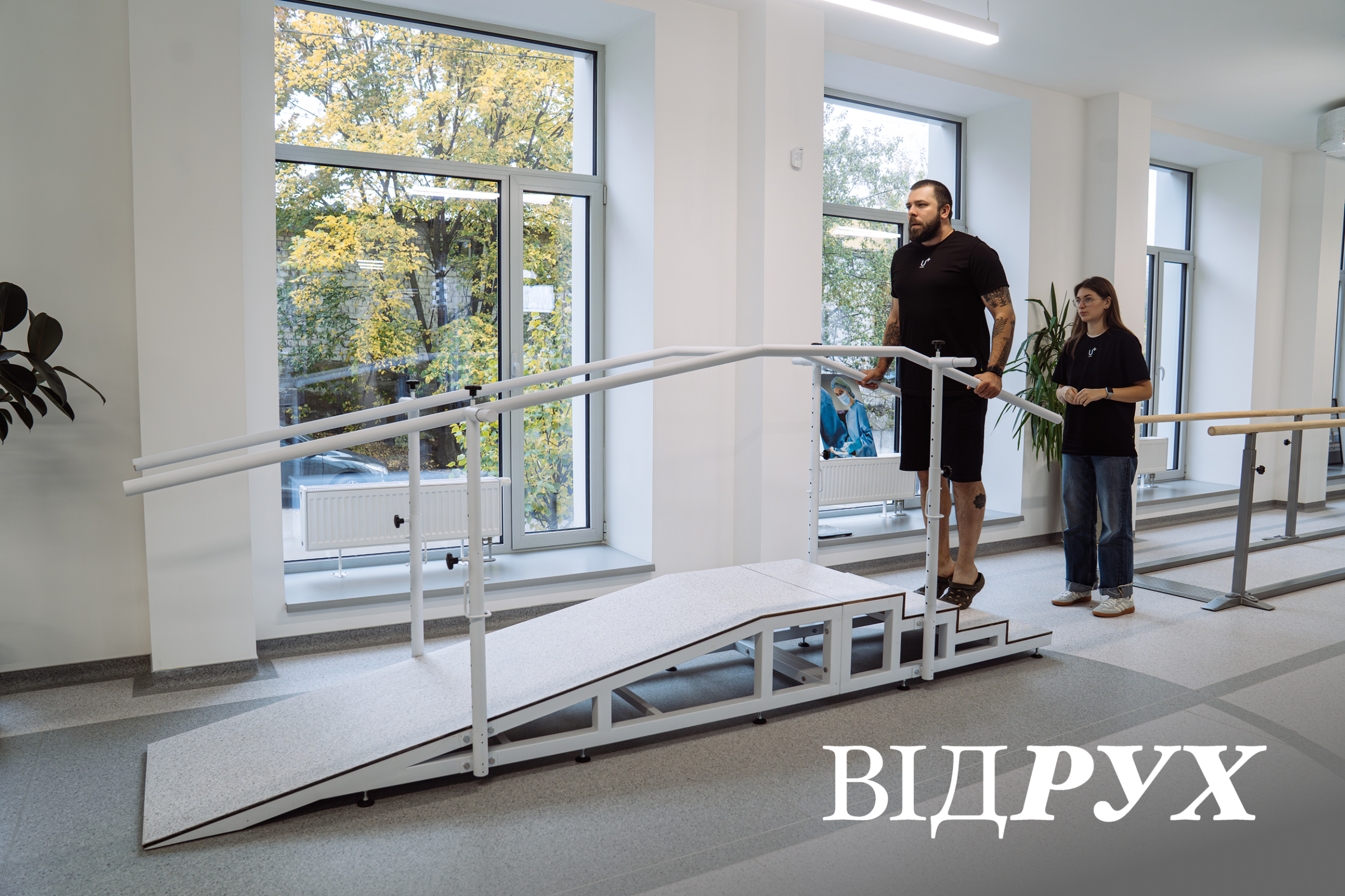

Many people think rehabilitation begins after receiving a prosthesis. In reality, it starts much earlier. After an amputation, the body needs time to recover and prepare for prosthetic fitting. This is where pre-prosthetic rehabilitation plays an important role.
The main goal is to prepare the body for future physical demands. Following an injury and prolonged treatment, especially if a person has spent several months bedridden, muscles lose strength. It is important to restore this strength, strengthen the core, and improve joint mobility, balance, and endurance. Eventually, a person will essentially have to learn how to walk again, so a strong muscular foundation is essential.
“We are not simply preparing the residual limb for a prosthesis. It is important to prepare the entire body, because amputation changes the way weight is distributed and how a person moves. That is why we work on muscle strength, balance, coordination, and endurance,” explains Viktoriia Kovalchuk, a physical therapist at U+ System.
Another important part of the process is preparing the residual limb itself. After surgery, swelling, sensitivity, and scars may remain. Specialists help gradually reduce swelling, work with the soft tissues, and prepare the residual limb for contact with the future prosthesis.
“The pre-prosthetic period is already an active stage of recovery. We use this time to prepare the body as thoroughly as possible for the next step,” notes Viktoriia Kovalchuk, a physical therapist at U+ System.
Once a prosthesis is fitted, the body will still need time to adapt to it. However, if a person has already developed the necessary strength, mobility, balance, and body awareness, the adaptation process can be much more confident.
As part of the Vidrukh project, the U+ System team helps people move through this journey step by step — from post-surgical recovery and pre-prosthetic preparation to prosthetic fitting, rehabilitation, returning to sports, social integration, and employment.
Share this article